
Contents
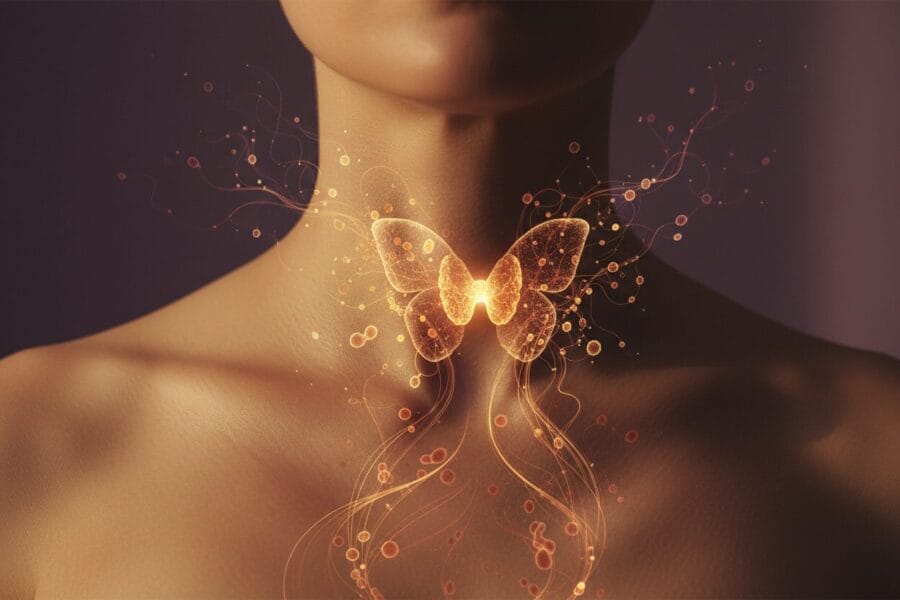
Your thyroid does far more than regulate metabolism. This small, butterfly-shaped gland sits at the center of a complex hormonal network that directly influences your menstrual cycle, fertility, energy, and mood. According to the MDPI International Journal of Molecular Sciences, female sex is an independent risk factor for thyroid dysfunction, with women 3 to 5 times more likely to be treated for thyroid disorders than men.
Understanding why requires looking at how thyroid hormones and female sex hormones influence each other at every stage of life.
How Thyroid Hormones Affect the Female Reproductive System
The Office on Women’s Health states it plainly: “Your thyroid helps control your menstrual cycle. Too much or too little thyroid hormone can make your periods very light, heavy, or irregular.” This happens because thyroid hormones regulate the hypothalamic-pituitary-gonadal (HPG) axis, the command chain that controls estrogen, progesterone, and ovulation.
When thyroid hormone levels drop, elevated TSH suppresses GnRH signaling and disrupts the entire reproductive cascade. The result can range from skipped periods and heavy bleeding to anovulation and infertility. Hyperthyroidism creates the opposite problem, often causing very light, infrequent cycles.
The effects extend well beyond menstruation. A PMC/NIH study found that hypothyroid women showed significantly low estradiol and testosterone levels, both of which improved after achieving euthyroidism (normal thyroid function). Treating the thyroid directly restored sex hormone balance, confirming that this relationship runs deeper than simple symptom overlap.
The Estrogen-Thyroid Feedback Loop
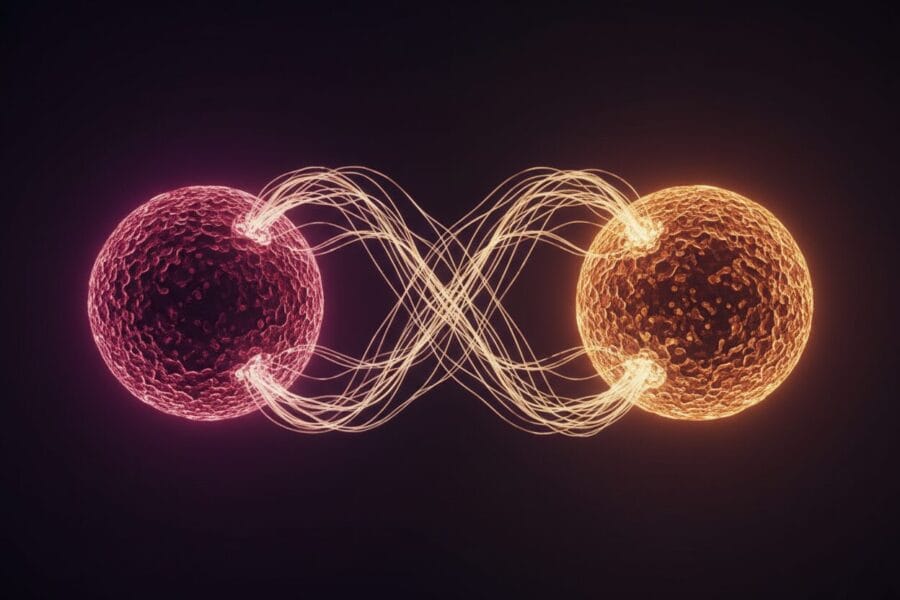
The relationship between estrogen and thyroid hormones runs in both directions, and that bidirectional dynamic is where many women get stuck without clear answers.
High estrogen levels increase a liver protein called thyroid-binding globulin (TBG). When TBG rises, it binds more thyroid hormone in the bloodstream, leaving less free T3 and T4 available for cells to use. This is especially relevant for women on oral contraceptives or hormone replacement therapy, since exogenous estrogen elevates TBG and reduces free thyroid hormone even when the thyroid gland itself is functioning normally. A woman’s TSH may look perfectly fine on paper while her cells are functionally starved of active thyroid hormone.
The reverse is equally important. Hypothyroidism impairs the liver’s ability to break down and eliminate estrogen through a process called biotransformation. When estrogen clearance slows, circulating estrogen accumulates, creating estrogen dominance. That excess estrogen then further suppresses thyroid hormone availability, completing a self-reinforcing cycle that is difficult to break without addressing both systems at once.
Life-Stage Vulnerability: When the Risk Is Highest
Thyroid disruption does not affect women uniformly across their lives. Certain windows carry significantly higher risk.
Puberty: Thyroid imbalance can delay or accelerate the onset of menstruation and early sexual development.
Reproductive years: Irregular cycles, anovulation, and unexplained infertility often trace back to subclinical thyroid dysfunction.
Pregnancy and postpartum: Thyroid demand increases during pregnancy, and unmanaged hypothyroidism raises miscarriage risk and can impair fetal neurological development. Postpartum thyroiditis affects roughly 5 to 10 percent of women in the year after delivery.
Perimenopause and menopause: Declining estrogen alters the estrogen-TBG dynamic, which can unmask underlying thyroid dysfunction or require medication dose adjustments.
Symptom Overlap: Why Diagnosis Gets Complicated
Fatigue, weight gain, hair loss, brain fog, and mood changes appear in hypothyroidism, estrogen dominance, perimenopause, and PCOS alike. This overlap frequently leads to delayed or missed diagnoses. A woman may be told her symptoms are “just hormones” or “just stress” when a thyroid panel would reveal the actual root cause.
Requesting a comprehensive panel matters here. TSH alone is not enough. Free T3, free T4, reverse T3, TPO antibodies, and sex hormone binding globulin (SHBG) together provide a far more complete picture of how these systems are interacting. If you want to understand how estrogen dominance and hypothyroidism overlap clinically, the symptom presentations are strikingly similar, which makes thorough testing essential rather than optional.
What Happens When You Treat It
The clinical evidence is encouraging. Restoring normal thyroid function improves estradiol and testosterone levels, regularizes menstrual cycles, and reduces estrogen dominance by allowing the liver to resume proper estrogen clearance. Women trying to conceive should know that most reproductive endocrinologists recommend maintaining TSH below 2.5 mIU/L before conception, a tighter target than the standard population reference range.
If you are exploring support options that address both thyroid and hormonal balance together, our full thyroid support supplement breakdown covers the evidence behind key nutrients and formulations worth considering.
The Bottom Line
Thyroid dysfunction and female hormonal imbalance are not separate problems. They are interconnected systems that regulate each other continuously. Recognizing the bidirectional relationship between thyroid hormones and estrogen is the first step toward finding answers that actually fit your symptoms.