

Contents
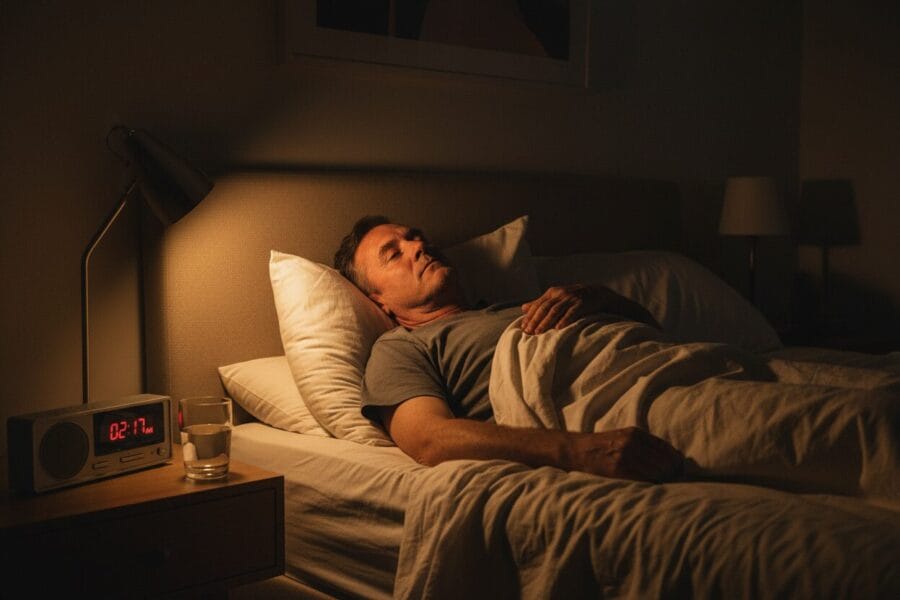
Most men know prostate issues become more common with age. What fewer realize is how deeply those issues are tied to sleep quality, and how that relationship runs in both directions. Poor sleep can accelerate prostate problems. Prostate problems destroy sleep. Understanding this cycle is the first step to breaking it.
How an Enlarged Prostate Disrupts Your Sleep
Benign prostatic hyperplasia (BPH) affects roughly 50% of men by age 60 and up to 90% by age 85. As the prostate enlarges, it compresses the urethra, restricting urine flow and triggering nocturia, where the bladder signals urgency multiple times each night.
Waking up two, three, or four times to urinate doesn’t just feel miserable. It fragments your sleep architecture, preventing you from reaching the deep, restorative stages your body depends on. Over time, chronic sleep deprivation elevates stress hormones and increases inflammation, both of which worsen BPH symptoms.
This is the vicious cycle: BPH disrupts sleep, poor sleep worsens BPH, which disrupts sleep further. Treating only one side of the equation rarely works long-term.
BPH-Related Nocturia vs. Other Causes
Not every nighttime bathroom trip points to the prostate. Diabetes, heart failure, and certain medications can all cause nocturia. BPH-related nocturia is typically accompanied by a weak urine stream, difficulty starting urination, and a sense of incomplete bladder emptying. If you’re experiencing those symptoms alongside disrupted sleep, a urologist evaluation is warranted.
Poor Sleep Raises Your Prostate Cancer Risk
The connection doesn’t stop at BPH. Research consistently shows that disrupted sleep is an independent risk factor for prostate cancer development.
A peer-reviewed NIH study found that men with problems falling and staying asleep had a hazard ratio of 1.7 for prostate cancer compared to men without sleep disruption. Separate research from an Icelandic population study found that men with sleep problems are 1.6 to 2.1 times more likely to develop prostate cancer overall.
A 2023 NCI study using wearable accelerometers on more than 35,000 men measured sleep objectively rather than relying on self-reported data, giving its findings extra weight: poor sleep quality was associated with a 15 to 20 percent greater prostate cancer risk. That’s a meaningful number, and it points directly to a biological mechanism worth understanding.
Why Sleep Loss May Promote Cancer Growth
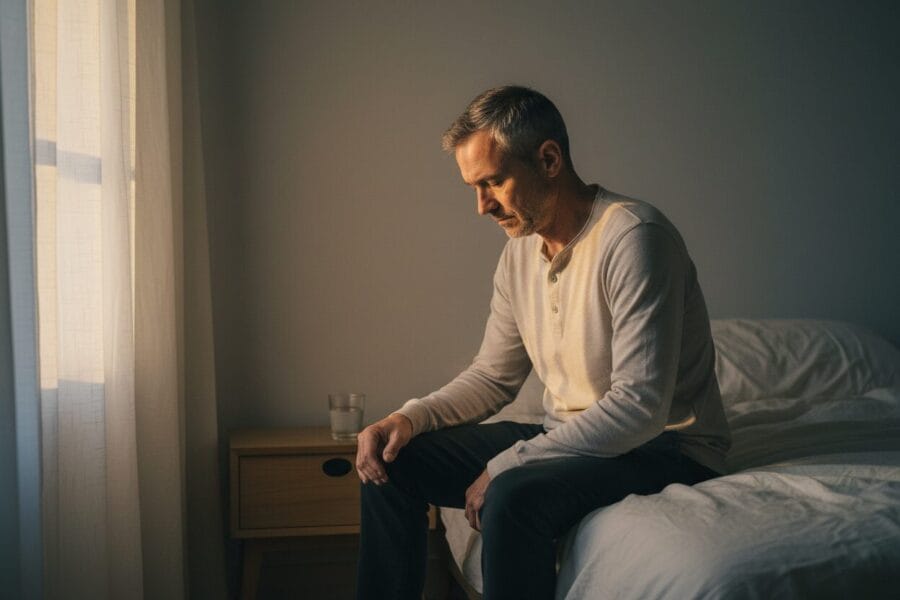
When you sleep poorly, melatonin production drops. Melatonin isn’t just a sleep hormone; it also plays a role in suppressing tumor growth, so less of it means reduced protection. At the same time, cortisol levels rise with sleep deprivation, suppressing immune function and potentially allowing abnormal cells to proliferate unchecked. This biological chain explains why the statistical link between sleep disruption and cancer risk is more than coincidence.
When Prostate Cancer Treatment Becomes the Sleep Problem
Men undergoing treatment for prostate cancer face a different challenge. Androgen deprivation therapy (ADT), the hormone treatment used to slow cancer growth, dramatically lowers testosterone and other sex hormones, and the side effects are a recipe for sleeplessness.
As Cancer Research UK notes, “Low levels of sex hormones can cause hot flushes or anxiety, making sleep difficult. Coping with other symptoms can feel harder if you are not sleeping well.” Hot flashes, night sweats, mood changes, and treatment-related fatigue all converge to make restful sleep genuinely difficult to achieve without targeted strategies.
The Prostate Cancer Foundation puts it plainly: “Sleep issues are very common during the prostate cancer journey and are no one’s fault. Sleeping even a little bit better can meaningfully improve your life.” Many men blame themselves for struggling, when the reality is that their treatment is physiologically working against rest.
Practical Steps to Improve Both Sleep and Prostate Health
Dr. David Samadi, a urologic oncologist, notes that “making specific lifestyle changes can improve both sleep quality and prostate health, creating a positive impact on men’s overall well-being.” Here’s where to start:
Fluid Timing: Reduce liquid intake two to three hours before bed. This won’t fix BPH, but it can meaningfully reduce how often you’re up at night.
Caffeine and Alcohol Cutoff: Both irritate the bladder and disrupt sleep architecture. Cutting off caffeine by early afternoon and limiting alcohol to earlier in the evening helps both problems at once.
Physical Activity: Moderate aerobic exercise reduces BPH symptom severity and improves sleep quality. Consistency matters more than intensity here.
For men on ADT, cognitive behavioral therapy for insomnia (CBT-I) has strong clinical evidence behind it and addresses the anxiety and sleep disruption the treatment causes without adding medications. It’s worth raising with your oncology team.
Medical options for BPH-related sleep disruption range from alpha blockers and 5-alpha reductase inhibitors to minimally invasive procedures. If lifestyle adjustments aren’t providing relief, a urologist can walk you through the appropriate next steps.
If you’re exploring supplements marketed for prostate and sleep support, our comprehensive prostate supplement review covers what the evidence actually supports before you spend money on products that may not deliver.
The Bottom Line
Prostate health and sleep are not separate concerns for men over 50. They’re deeply interconnected, and addressing one without the other leaves half the problem unsolved. Whether you’re managing BPH symptoms, navigating cancer treatment side effects, or simply trying to protect your long-term health, prioritizing sleep is one of the most evidence-backed moves you can make.