

Contents
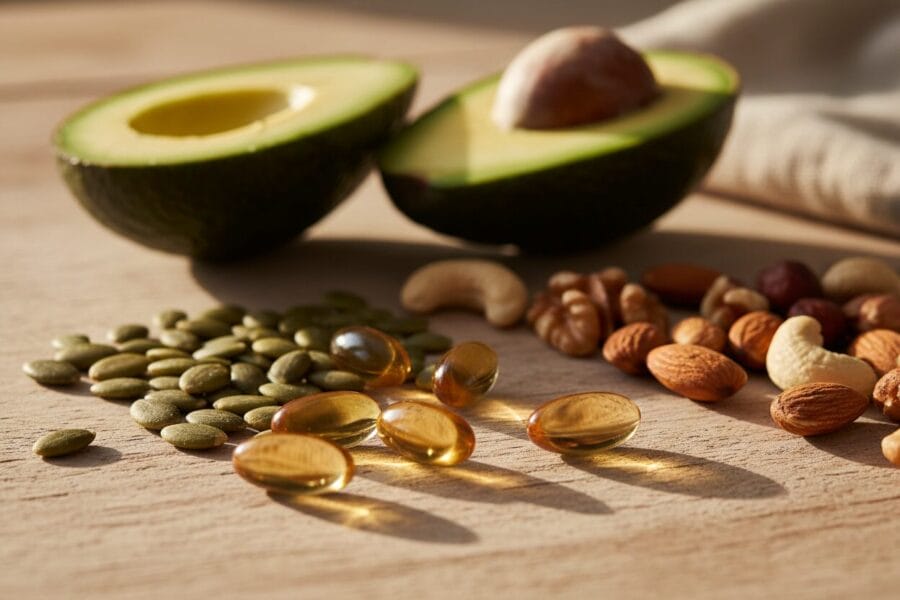
Prostate problems affect roughly half of all men over 50, and many are looking beyond prescriptions for reliable support. Beta-sitosterol, a plant-derived compound found in foods like avocados, pumpkin seeds, and vegetable oils, has quietly built a strong clinical track record for supporting prostate health and urinary function.
Here’s what the research actually shows, and what men should know before supplementing.
What Is Beta-Sitosterol?
Beta-sitosterol is a plant sterol, part of a family of compounds structurally similar to cholesterol but sourced entirely from plants. It occurs naturally in nuts, seeds, legumes, and many cooking oils. While diet provides some exposure, therapeutic doses for prostate support typically require supplementation.
The compound has been studied for decades. A foundational meta-analysis by Wilt et al. (1999), now cited by over 327 studies on benign prostatic hyperplasia, established the baseline evidence that herbal medicines containing beta-sitosterols can meaningfully relieve urinary symptoms and flow problems caused by an enlarged prostate.
How Beta-Sitosterol Supports Prostate Health
Inhibiting the 5-Alpha Reductase Enzyme
The primary mechanism involves blocking 5-alpha reductase, the enzyme that converts testosterone into dihydrotestosterone (DHT). Elevated DHT drives prostate tissue enlargement in benign prostatic hyperplasia (BPH), and by reducing DHT activity, beta-sitosterol helps slow that growth process.
This is the same pathway targeted by pharmaceutical drugs like finasteride and dutasteride, though beta-sitosterol works more gently and carries a significantly lower side-effect burden. It also modulates prostaglandin synthesis, reducing localized inflammation in prostate tissue.
Reducing BPH Symptoms Clinically
Clinical outcomes are both measurable and meaningful. A 2023 peer-reviewed review by Macoska found that “patients treated with beta-sitosterol demonstrated significantly reduced International Prostate Symptom Scores (IPSS), increased quality of life, decreased post-void residual volume, and improved urinary flow rates.”
In practical terms, lower IPSS scores translate to fewer nighttime bathroom trips, less urgency, a stronger urine stream, and less of that frustrating sense of incomplete emptying. These are quality-of-life improvements men notice every day.

A Newly Discovered Structural Mechanism
Most discussions stop at DHT inhibition, but 2024 research published in the Journal of Dietary Supplements revealed something new. D’Arcy et al. found that beta-sitosterol alters collagen distribution and sequesters collagen within prostatic fibroblasts, likely in an age-dependent manner. This suggests the compound also remodels the structural tissue environment of the prostate, not just its hormonal signaling.
Dosage: What Clinical Trials Actually Used
This is where men often get misled. Clinical trials supporting BPH symptom relief used doses ranging from 60 to 130 mg daily, typically split across two or three doses. A broader literature review cites 45 to 180 mg daily as the evidence-based range.
Commercial products frequently sell 500 mg capsules, which is three to eight times the clinically studied dose, with no evidence that higher amounts produce better outcomes. The key dosage considerations are straightforward:
Clinical Trial Range: 60 to 130 mg daily, the core window supported by BPH research.
Broader Evidence-Based Range: 45 to 180 mg daily, based on the wider literature.
Commercial Products: Often 500 mg per serving, well above studied doses.
Onset Timeline: Most studies ran 6 to 26 weeks; expect gradual improvement, not quick results.
Men should target the 60 to 130 mg daily range as a starting point and allow at least 4 to 8 weeks before judging whether it’s working.
Emerging Research: Anti-Cancer Properties
Beyond BPH, beta-sitosterol’s potential role in prostate cancer management is gaining scientific attention. Saw palmetto extract containing beta-sitosterol has shown anti-tumorigenic activity in prostate cancer cells and rodent models, with the compound appearing to promote apoptosis and disrupt proliferation signaling.
This research is still largely preclinical. Men with prostate cancer concerns should treat these findings as encouraging but not yet practice-changing, and always consult a urologist before using any supplement alongside conventional treatment.
Who Should Consider Beta-Sitosterol
Beta-sitosterol is most relevant for men over 40 experiencing early BPH symptoms: frequent urination, reduced flow, nighttime urgency, or incomplete emptying. It also suits men who want a natural preventive approach before symptoms become significant.
For men researching quality options, a comprehensive beta-sitosterol supplement review can help identify products dosed within the clinically studied range.
Key Takeaways
Beta-sitosterol has genuine, well-documented benefits for men’s prostate health, backed by decades of clinical research. The mechanism is clear, the symptom relief is measurable, and the safety profile compares favorably to pharmaceutical alternatives.
The main practical pitfall is choosing products dosed far above what the evidence supports. Stick to the 60 to 130 mg daily range, give it adequate time, and consult a physician if symptoms are severe or getting worse.